Is Mother Goose to blame?
Finger-pointing, belly-aching, and fault-finding are modifiers that can readily be associated with the goings-on in too many circles these days. Someone else is always responsible for the fine mess we're in and someone else had darned well better figure out a way to get us out of it. This administration blames the last. Teachers blame parents. Parents blame the media. The media blame public demand. The dog blames the cat and everyone blames it on their medication, including the dog and cat.
 It
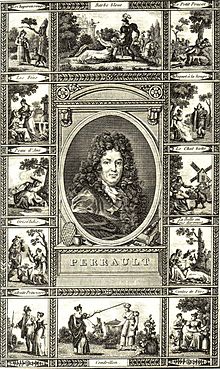
is entirely possible that Mother Goose may be to blame. You know who I mean, "the fairy birdmother" from the 700s whose
bedtime stories for children influenced the publication in 1697 of a book titled "Tales from the Past with Morals." The
first American edition was published in 1787, the same year the U.S. Constitution was signed.
It
is entirely possible that Mother Goose may be to blame. You know who I mean, "the fairy birdmother" from the 700s whose
bedtime stories for children influenced the publication in 1697 of a book titled "Tales from the Past with Morals." The
first American edition was published in 1787, the same year the U.S. Constitution was signed.
Aha! At the very minimum then, Mother Goose is to blame for our social and governmental ills.
Why, you may ask? Because these writings are about more than cows that jump over the moon and merry old souls. These are the same verses in which babies are told to stick their fingers in their eyes and lie about it; good boys are threatened with swords; and Mother G has a fascination with chopping off heads and writes melodiously of a woman losing her three sons to hanging, drowning and being lost. And, there are the heinous things done to animals (PETA, are you paying attention?). Mother G verse also makes frequent references to people and animals that laugh over others' painful plight. And this is a book about morals? Mother Goose got us into this fine mess. Let's blame "her," though the first known book of Mother Goose verse was written by a man, Charles Perrault.
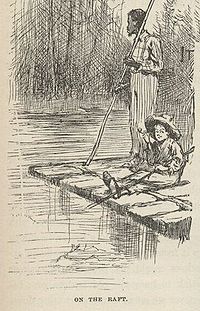
And while we're at it, why hasn't anyone raised a flap about a Mother Goose verse that makes frequent use of the "n" word? If "The Adventures of Huckleberry Finn" needed to be "updated" and "sanitized," then somebody better get busy with the editing pen back at NewSouth Books, the company responsible for replacing the "n" word with "slave" in the Mark Twain classic.
 Specifically,
Mother Goose wrote a verse called "The Ten Little N-s." The tale begins with ten black children but counts down to one as
during various activities, one chokes, another oversleeps, a third chooses not to travel with the others, one "chops himself
in halves," a fifth is stung by a bee, another is "got in Chancery," the seventh is swallowed by a herring, a bear "hugs"
the eighth, another is "frizzled up" in the sun and the remaining child gets married (perhaps implying that marriage is
yet another misfortune). The original English illustrations are heavily stereotyped.
Specifically,
Mother Goose wrote a verse called "The Ten Little N-s." The tale begins with ten black children but counts down to one as
during various activities, one chokes, another oversleeps, a third chooses not to travel with the others, one "chops himself
in halves," a fifth is stung by a bee, another is "got in Chancery," the seventh is swallowed by a herring, a bear "hugs"
the eighth, another is "frizzled up" in the sun and the remaining child gets married (perhaps implying that marriage is
yet another misfortune). The original English illustrations are heavily stereotyped.
Depictions of this nature strike me as being more offensive than using the "n" word, a generally understood regionalism of the late 1880s for a person of color in "Huckleberry Finn."
According to The State University of New Jersey Rutgers, "Older children . . . may return to Mother Goose to explore additional meaning . . . possible referents to real persons and events." The same can be said of the study of "Huck Finn." Much can be learned from thoughtful analysis. Therefore, "The Adventures of Huckleberry Finn" and the writings of Mother Goose should be left just as they are. The crux lies in who influences this process and their ability to think perceptively, inform coherently and educate wisely.
I would hope those entrusted to interpret this literature seek a kinder, gentler society where all thrive because we are determined not to repeat the wrongs of the past. Maybe I seek a fairy tale world - the one in which we all live happily ever after. If so, blame me.
Jan Corey Arnett©2011